Showing posts with label child eating. Show all posts

Friday, May 24, 2013

Food Play for Problem Feeders

Play with your food!

Karina Gonzalez, M.S., CCC-SLP

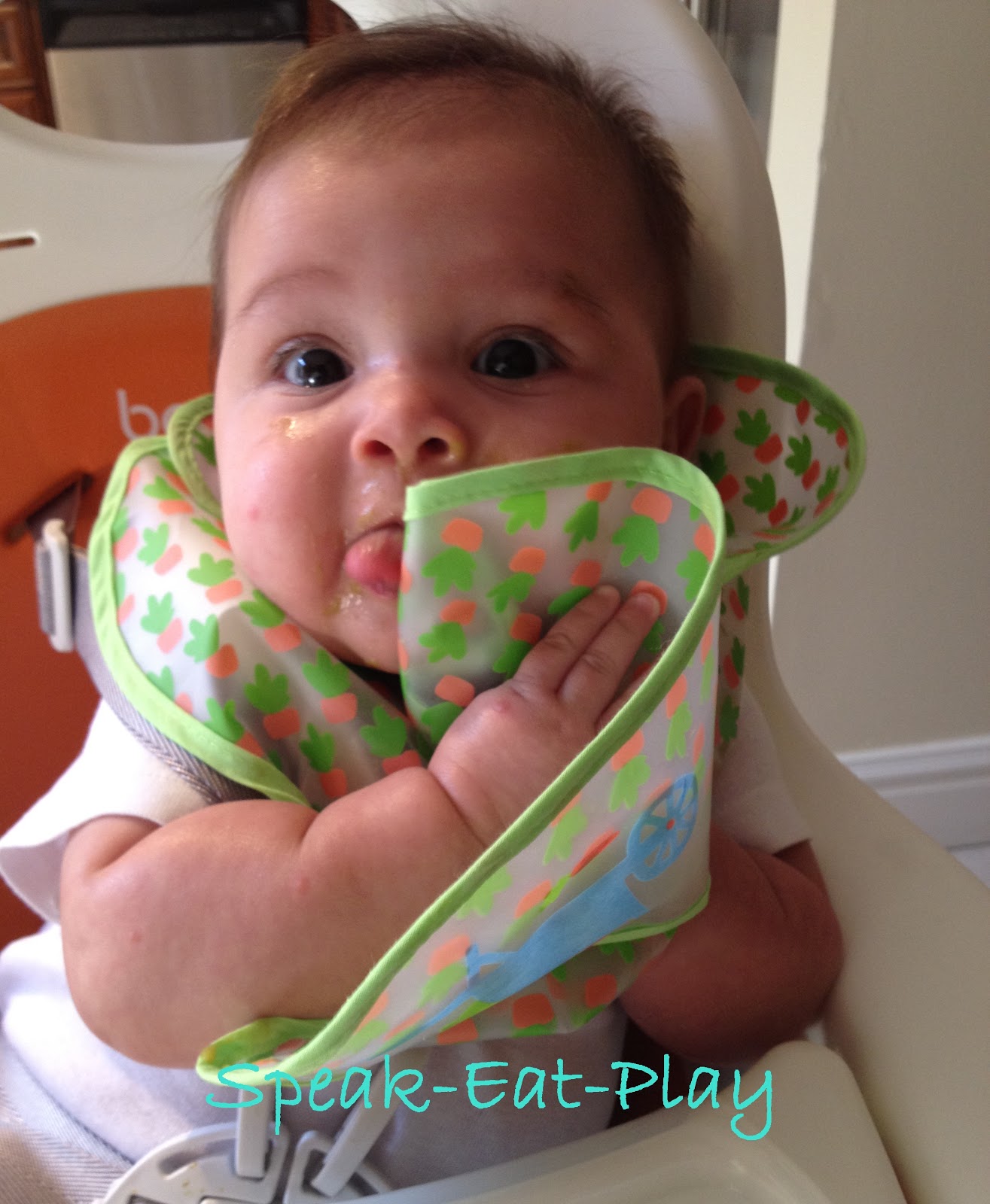
Do you remember your parents telling you to not play with your food? Well, I'm here to tell you that for a picky eater or a child that is aversive to textures, playing with food is a must. All children need to explore textures with their hands. Exploring the textures of food, helps to develop a good eating habit. It is important to start early, yes as soon as he's old enough to sit on a high chair, and don't be afraid to get messy! Playing with food has many benefits, here are a few:
  • Allows the child to become comfortable with the colors, textures, and smells of food with out having to eat it.
  • Makes meal time fun.
  • Helps get rid of any sensory issues on the hands and fingers (Some of these kids don't like to touch sand, grass, or even soap).
  • Builds confidence, especially if you reward them.
  • Develops good eating habits (as mentioned above).
  • Develops good hand-eye coordination.
  • Develops find motor skills, especially if they have to pick up small foods like Cheerios or slippery ones like spaghetti.
  • Develops hand to mouth coordination that will also help with overall self feeding skills.
  • Helps to develop play skills. 

Sunday, March 17, 2013

Mesh Feeders


Why I Love Mesh Feeders (Available for purchase HERE)

By Karina Gonzalez, MS, CCC-SLP.
    
 Picture source: Amazon.com

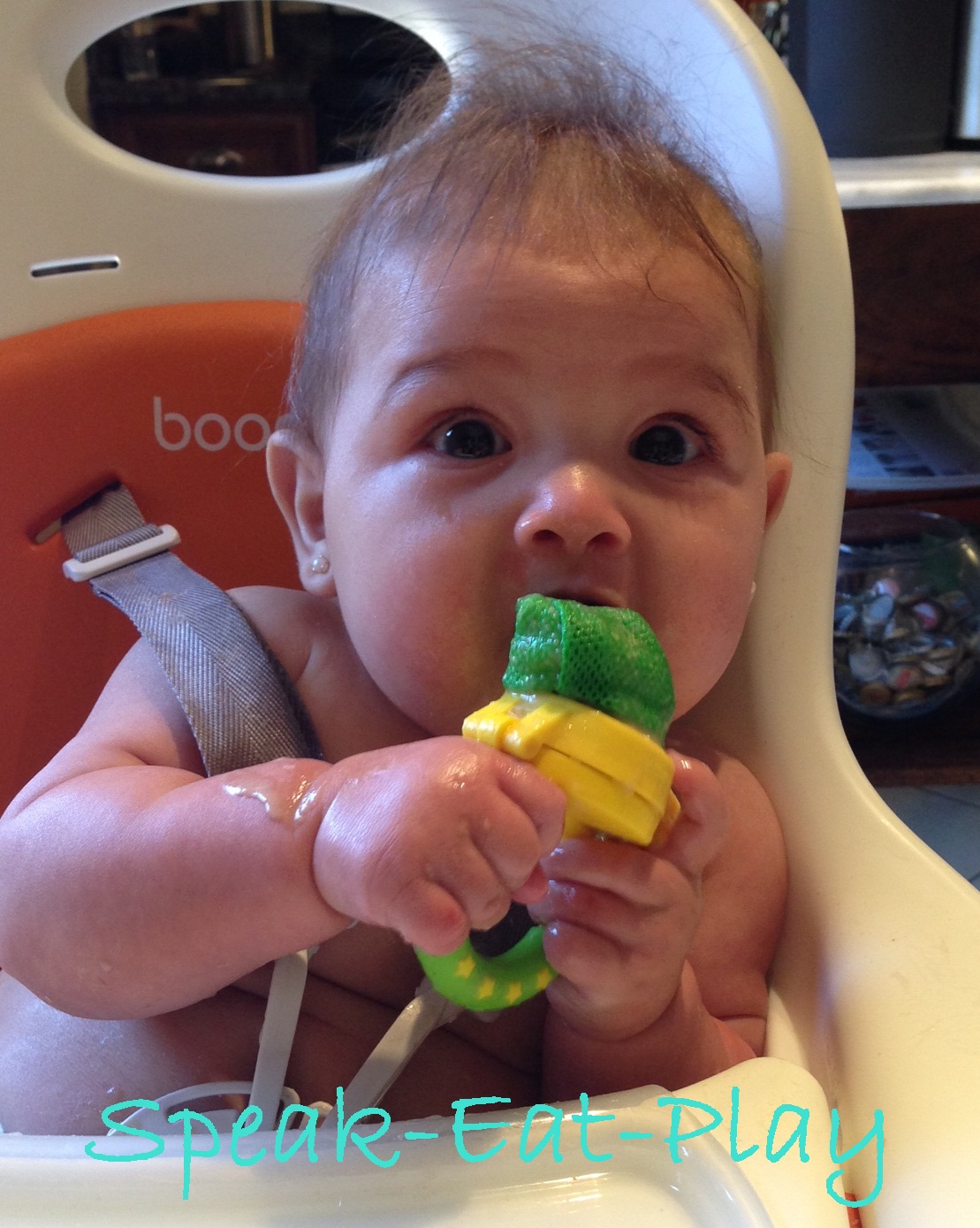
Many parents are afraid of introducing solid foods due to the risk of choking, however, this fear can be put at ease with a mesh feeder. Mesh feeder are exactly what the name says, it’s a mesh pocket that can be filled with fruits, veggies or any other solid food you would like your child to have. They have a plastic handle that babies can use to grip. As your child chews and suckles on the feeder, the contents come out through the mesh in a mushy texture that is safe for your baby to swallow. A mesh feeder can be used as early as 4 months of age, as long as your child has good head control and has no issues with swallowing. There are many benefits to using a mesh feeder, and these include:


Friday, February 1, 2013

Is It a Feeding Disorder?


Pin It!

Is your child’s picky eating a cause for concern?
by Karina Gonzalez, M.S., CCC-SLP


Does your child only want to eat the same thing over andover again? Does your child refuse to try new foods? Is your child veryselective about what he will eat? If so, you are not alone. Many young childrenwill be picky with their acceptance of food at some point in their childhood. Astudy performed by Carruth, b., Ziegler, P., Gordon, A., and Barr, S (2004), lookedat the occurrence of Picky Eaters in infant and toddlers and they found that,picky eating can begin at 4-6 months of age, and ultimately 50% of 24 montholds are picky eaters! No wonder there’s a huge industry for toddler foods andkids’ menus at every restaurant! Parents need to understand that your child’sfear of trying new food items is normal and most of the time there is no needto panic, but how do you know if your picky eater is a cause for concern?Here’s a list of red flags to look for:


·        If your child is below the growth chart at yourpediatrician’s check-up or has poor weight gain.

·        If your child is refusing an entire food group,for example: proteins, fruits or veggies.

·        If your child eats less than 30 different foods.

·        If your child is not eating age appropriatetextures, for example a 2 year old only eating puree baby food.

·        If mealtimes are consistently a battle betweenyou and your child.

·        If meal times are lengthy.

·        If your child has not started to self-feed andis not cup drinking by 24 months.

·        If your child has a strong reaction to tryingnew foods, gagging, crying, vomiting or disruptive behaviors.

·        If your child is not willing to touch new foods.

·        If your child has a delay in the development ofhis oral skills needed for eating, for example; not chewing and swallowing foodwhole.

·        Coughing, chocking and frequent gagging duringmeals.


If your child is displaying any of the red flags above orany other behaviors that concern you, speak to your child’s pediatrician assoon as possible. Your child may benefit from feeding therapy and earlyintervention is key.

You may also contact me at speakeatplay@gmail.com for a consultation.
Pin It!