Showing posts with label child. Show all posts

Wednesday, April 17, 2013

Social Skills


Does your child need help with social skills?

by Jackeline Gurdian, MS, OTR/L


It is key for a child to have positive relationships with peers to allow for maximal success in life. Academic skills are very important of course but without appropriate social skills, success is limited.

Social skills begin at birth but we often start to see and hear parents complain about delays when the child begins school.


Here are some examples of social skills that school aged children (4-5 years of age) should have:

·         Play group games appropriately (plays fair, takes turns, etc.)

·         Make close friends

·         Win or lose gracefully

·         Shows interest in others

·         Able to interact nonverbally (smiling, nodding, etc.)

·         Initiate and maintain conversations

·         Able to empathize with peers

·         Participate in pretend play

·         Able to stay on task for at least 5 minutes

·         Establish good eye contact with peers
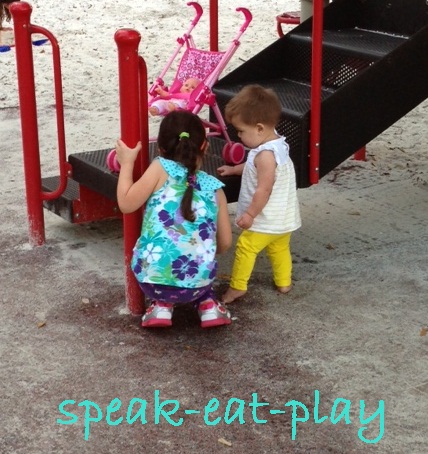

Children learn from imitation and practice, so it is important to always show appropriate behaviors for your child to follow. For some children, social skills come naturally and others need a little help. If you feel your child needs a little or even a lot of help, please do not hesitate to contact us speakeatplay@gmail.com and we would be more than happy to find a social skills group that fits your child’s needs.
 
 
Please feel free to leave any comments below, we would love to hear your thoughts. Like our blog? be sure to sign up to recieve new posts via email or follow us on facebook facebook.com/speakeatplay.
Pin It!

Sunday, April 7, 2013

Increasing Your Child's Vocabulary

Other Words your Toddler Needs To know…

 
By Karina Gonzalez, MS CCC-SLP
 

Do you know what words your child needs to have in his/her vocabulary? What I have discovered throughout the years as a speech-language pathologist is that parents are great at teaching children the names of objects. I see many toddlers that know the names of many animals, toys, body parts and even modes of transportation. This is great! However, these kids have a difficult time speaking in phrases. I find that they generally use 1 word to communicate and seem to resort towards gestures for everything else they need to say. In order for your child to combine words into phrases he needs to know many other words, not just nouns. So if you are currently working on increasing your child’s vocabulary be sure to include the following words in his/her repertoire.  
 

Spatial Terms:

  • Up/down
  • In/on
  • Over/under
  • Next to or beside
  • On/off
  • Between


Friday, March 29, 2013

Positional Plagiocephaly


Does your baby have flat areas on his head (Positional Plagiocephaly)?

By Jackie Gurdian, MS, OTR/L

Childbirth is an adventurous ride for your baby and sometimes it results in your newborn looking like a cone head, but don’t worry, because your baby’s skull will even out on its own.


Some babies develop a flat area after birth, this is called positional plagiocephaly. Flatness can occur on either side of the back of the head.

Why does this occur?

One of the main reasons why babies develop flat areas is because they sleep or rest in same position repeatedly. It is not recommended that babies spend too much time laying on their backs when they are awake, or anywhere where their head is laying head against a surface.

Another reason is having weak neck muscles. Your baby could be having difficulty turning his head to both sides. This can lead to torticollis, other times the child has torticollis which leads to flatness (information on torticollis coming soon). 

Prematurity is also another reason that plagiocephaly can occur. Premature babies have softer skulls than most full term babies and possibly could be spending time in the neonatal intensive care unit (NICU) where they are unable to move from the same position for long periods of time.

Positional plagiocephaly can also occur in utero when there is pressure placed on your baby’s skull.


What do you do if you suspect your child may have positional plagiocephaly?

This could be very easy for you to notice. Most of the time you will see a flattened side and this may cause that side to look pushed towards the front of the face. You may also notice asymmetry when looking at the face in frontal view.

If you suspect your child may have a “flat head”, ask the doctor. The doctor could recommend simple positioning changes to make around the house or possibly a custom molded helmet to provide pressure on some areas and allow growth in others.

How can you prevent positional plagiocephaly?

·         Lots and lots of tummy time to not only prevent baby being on his back for so long but also to strengthen their neck muscles. You could also try baby carriers when you need to be on the go.

·         Try putting baby at different ends of the crib every nap or bedtime. Usually if you are right handed you will place child in crib the same way every time try and alternate what arm you use to hold baby.

·         Limit the time that the baby is in equipment such as car seat, bouncy chair, swing or other similar seats.

·         If you have crib safe toys, alternate sides in which baby will have to look to play.
  • Use a product like the Tortle, a beanie especially made for positional plagiocephaly, we wrote a review about it HERE.    

If you would like more information on different positional adjustments to make for your child please contact us speakeatplay@gmail.com.  We will also love to read your comments and any other suggestions you have tried.
Be sure to like our facebook page for updates and other informational posts www.facebook.com/speakeatplay

Thanks for reading!
Pin It!

Sunday, March 17, 2013

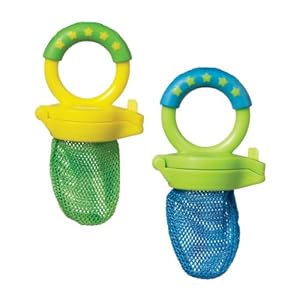
Mesh Feeders


Why I Love Mesh Feeders (Available for purchase HERE)

By Karina Gonzalez, MS, CCC-SLP.
    
 Picture source: Amazon.com

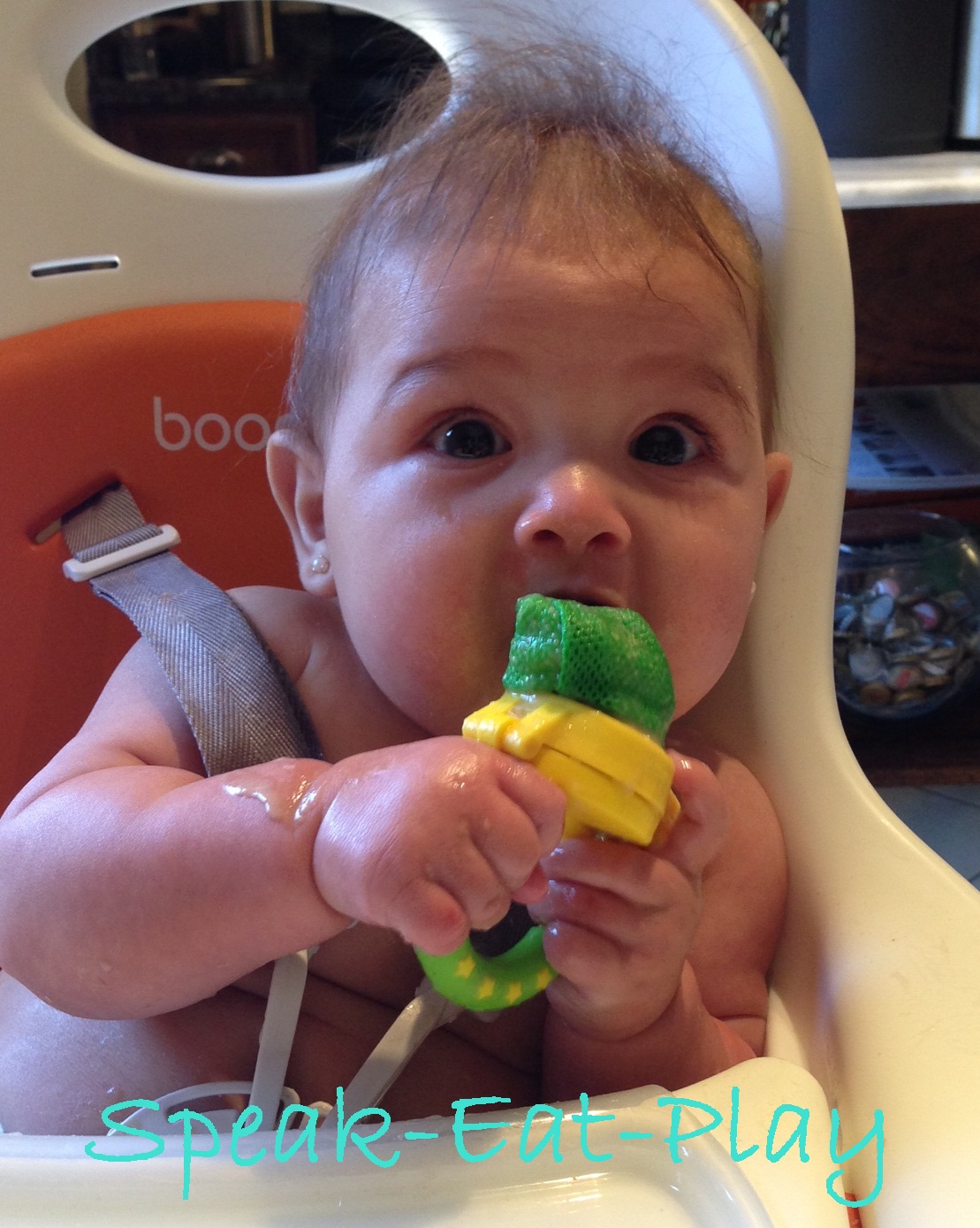
Many parents are afraid of introducing solid foods due to the risk of choking, however, this fear can be put at ease with a mesh feeder. Mesh feeder are exactly what the name says, it’s a mesh pocket that can be filled with fruits, veggies or any other solid food you would like your child to have. They have a plastic handle that babies can use to grip. As your child chews and suckles on the feeder, the contents come out through the mesh in a mushy texture that is safe for your baby to swallow. A mesh feeder can be used as early as 4 months of age, as long as your child has good head control and has no issues with swallowing. There are many benefits to using a mesh feeder, and these include:


Friday, March 1, 2013

Playing with your Newborn


10 Fun and Interactive Ways to Play with your Newborn

By Jackie Gurdian, M.S., OTR/L

It might be hard to believe but your newborn wants to play. I’m not talking playing a game of Monopoly but playing peek-a-boo is her idea of a fun night. For these games there is no need for fancy toys (the toys you registered for and found out later that your baby rather play with a box), instead you will be her favorite toy.

First, lets answer this question, why is play important?

Play is the way that newborns learn how to communicate, socialize, move and understand what is going on around them and socializing with you is the best way for baby to learn. Stimulation is very important for baby’s well-being and many studies show babies who are stimulated reach physical and cognitive milestones earlier.

Now, the fun stuff below is a list of games that my daughter loved to play as well as some ideas from other parents.

Sunday, February 17, 2013

Pacifier Use and Speech Development


What you may not know about a pacifier
by Karina Gonzalez, MS CCC-SLP
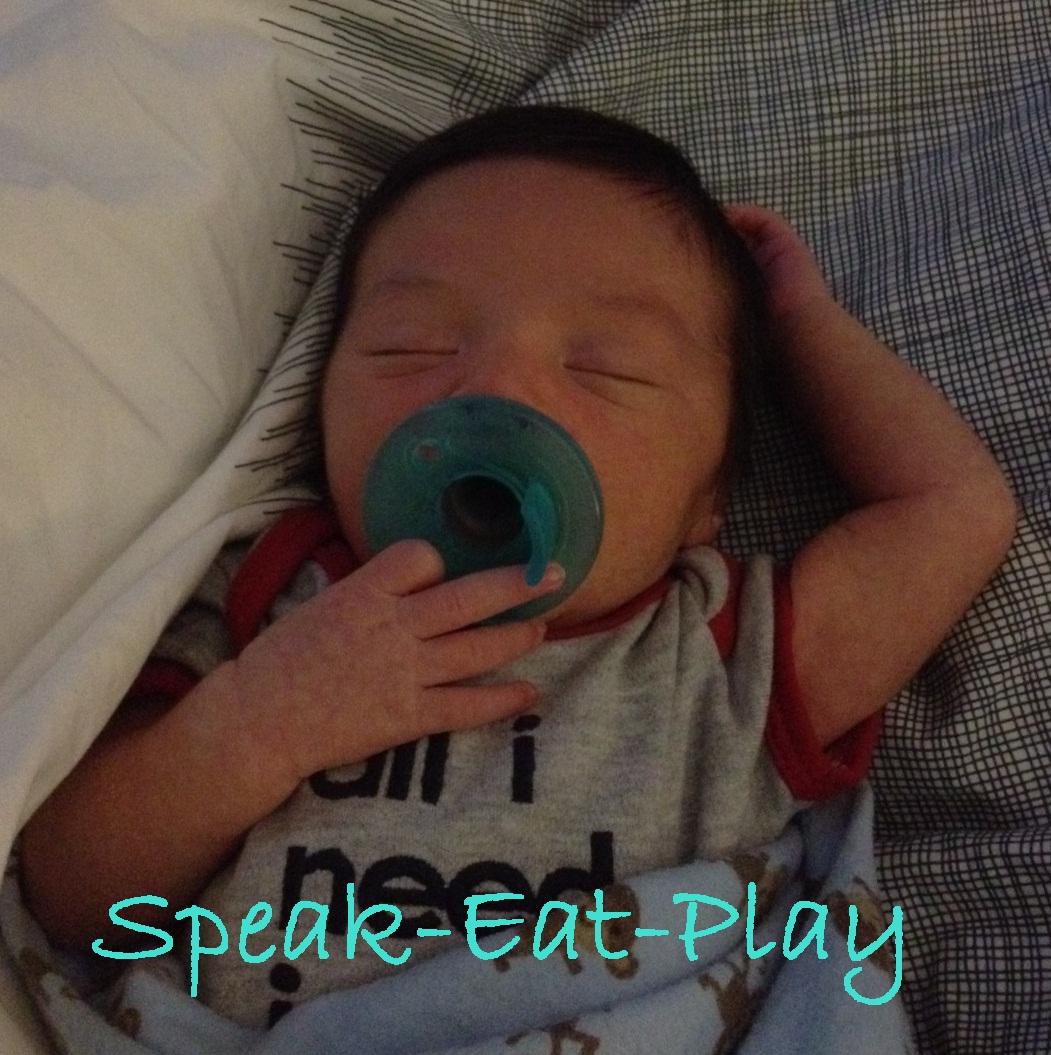
What is my biggest pet peeve? Seeing a toddler with a pacifier! There have even been times that I have seen 4 year olds with a paci in their mouths. Parents if this is your child, please don’t be offended, instead keep reading, I’m here to help. I’m sure every speech-language pathologist feels the same about the dreaded binky, tete, boopy, chupi, mimi, paci, sucky, etc. This innocent looking device is a speech development’s worst nightmare. Well I might be exaggerating a little, but I’m trying to prove a point. Don’t get me wrong, a pacifier serves a purpose in an infant’s life. It helps with soothing, calming and comforting babies, as well as quenching the instinctive desire to suck. This is a behavior that develops in utero, prenatal imaging has shown babies sucking their thumb or fingers before birth, so it’s only natural for your baby to want to suck. Another advantage of a pacifier is that it helps promote the sucking reflex in premature infants. Pacifiers have also been linked reducing the risk of sudden infant death syndrome (SIDS).

However, these benefits apply only to early infancy, as your baby grows the benefits decrease and they begin to wreak havoc in your baby’s mouth including…

Saturday, February 9, 2013

Meal Time Tips for Picky Eaters

Pin It!

Making Meal Time with your Picky Eater Easier

by Karina Gonzalez, MS CCC-SLP

Having a picky eater can be very stressful at times, but there some simple changes you can make that may help. Here are a couple of tips I have learned about that will make meal times easier.  

·        Focus on making meal times enjoyable andrelaxing: play games, lay out food in the shape of a happy face, have a contest. Make it fun, fun, fun!

·        Reward your child for every bite he takes, youcan praise him or high five.

·        Battles and forcing your child will only make apicky eater pickier. Keep it positive and fun!

·        Do not bribe your child, this will only make himmore aversive to food, just simply let him try the food on his own terms. Youmay need to present the new food 10 times before he will try it.

·        Offer new foods when your child is hungry andrested.

·        Give only 1 new food at a time.

·        Give the new food with favorite foods toencourage acceptance.

·        Show him you like the new food. Take a bite, andsay “delicious”.

·        Encourage your child to play with the new foodand allow him to get messy. (Have you read my post about playing with food? read it HERE.

·        Use dips or sauces. Read my post on how much fun ice cube trays can be,HERE

·        Limit the amount of liquid your child eats,often times they get full on liquids and will not be hungry enough to eat.

·        Have a feeding schedule of 3 meals, limitsnacking to 2 times per day and try to eat at the same times every day.  Having this schedule will allow your child toget hungry between meals.

·        Feed your child at the same time as the rest ofthe family. Also, at the dinner table for every meal. Avoid eating on thecouch, or in the play room.

·        Allow your child to help you cook and servefood.

·        Have “lunch dates” with your child and otherchildren. Children copy from each other!

·        Change something about his favorite foods, like:shape, color, brand, or size, so that your child does not get tired of eatingthe little bit of foods he enjoys.
  • If you have a picky infant you can try a mesh feeder, read HERE.
  • Be sure to also read my post on pacifier use and how it can affect your child's feeding, HERE. As well as when to stop the bottle, HERE.

I hope these tips can help make meal times a little easier for you, if you need individualized help pleasecontact me speakeatplay@gmail.com . And remember, having a picky eater is very common and is normalpart of childhood development.

Do you think your child's picky eating is a cause for concern?, please read HERE.
Be sure to sign up to receive blog posts in your mailbox.
Pin It!

Friday, February 1, 2013

Is It a Feeding Disorder?


Pin It!

Is your child’s picky eating a cause for concern?
by Karina Gonzalez, M.S., CCC-SLP


Does your child only want to eat the same thing over andover again? Does your child refuse to try new foods? Is your child veryselective about what he will eat? If so, you are not alone. Many young childrenwill be picky with their acceptance of food at some point in their childhood. Astudy performed by Carruth, b., Ziegler, P., Gordon, A., and Barr, S (2004), lookedat the occurrence of Picky Eaters in infant and toddlers and they found that,picky eating can begin at 4-6 months of age, and ultimately 50% of 24 montholds are picky eaters! No wonder there’s a huge industry for toddler foods andkids’ menus at every restaurant! Parents need to understand that your child’sfear of trying new food items is normal and most of the time there is no needto panic, but how do you know if your picky eater is a cause for concern?Here’s a list of red flags to look for:


·        If your child is below the growth chart at yourpediatrician’s check-up or has poor weight gain.

·        If your child is refusing an entire food group,for example: proteins, fruits or veggies.

·        If your child eats less than 30 different foods.

·        If your child is not eating age appropriatetextures, for example a 2 year old only eating puree baby food.

·        If mealtimes are consistently a battle betweenyou and your child.

·        If meal times are lengthy.

·        If your child has not started to self-feed andis not cup drinking by 24 months.

·        If your child has a strong reaction to tryingnew foods, gagging, crying, vomiting or disruptive behaviors.

·        If your child is not willing to touch new foods.

·        If your child has a delay in the development ofhis oral skills needed for eating, for example; not chewing and swallowing foodwhole.

·        Coughing, chocking and frequent gagging duringmeals.


If your child is displaying any of the red flags above orany other behaviors that concern you, speak to your child’s pediatrician assoon as possible. Your child may benefit from feeding therapy and earlyintervention is key.

You may also contact me at speakeatplay@gmail.com for a consultation.
Pin It!