Showing posts with label toddlers. Show all posts

Monday, January 16, 2017

Why is imitation important for child development?

My 15 month old daughter, Maya playing with our dog Bailey...


I love how she is imitating the dog rolling on the floor! This is an example of typical play and social skills development. Imitation is very important, without imitation skills kids will have a difficult time learning, and developing their communication and play skills. You should see your baby begin to imitate simple movements (such as clapping) or facial expressions as early as 5 months!

Does your child have good imitation skills? Speak to your pediatrician if you have any concerns whatsoever, they should be able to tell you if your child's imitation skills are on track.

Sunday, April 7, 2013

Increasing Your Child's Vocabulary

Other Words your Toddler Needs To know…

 
By Karina Gonzalez, MS CCC-SLP
 

Do you know what words your child needs to have in his/her vocabulary? What I have discovered throughout the years as a speech-language pathologist is that parents are great at teaching children the names of objects. I see many toddlers that know the names of many animals, toys, body parts and even modes of transportation. This is great! However, these kids have a difficult time speaking in phrases. I find that they generally use 1 word to communicate and seem to resort towards gestures for everything else they need to say. In order for your child to combine words into phrases he needs to know many other words, not just nouns. So if you are currently working on increasing your child’s vocabulary be sure to include the following words in his/her repertoire.  
 

Spatial Terms:

  • Up/down
  • In/on
  • Over/under
  • Next to or beside
  • On/off
  • Between


Friday, February 15, 2013

Bilateral Coordination Skills

Doesyour child have poor bilateral coordination skills?

By Jackie Gurdian, MS OTR/L
 

A bilateral skill is the child’s ability to utilize bothsides of the body for activities. A child with poor bilateral skills wouldprefer to use one hand than use both hands together for activities that requiretwo hands. Some children with hemiparesis have significant weakness in one sideof the body. It’s important to incorporate affected side to increase functionaluse of hand.

Below you will find some fun activities to incorporate inthe home to promote bilateral skills. Remember to have fun!

Bilateral Activities


Everyday household activities
  • Carry container
  • Help clear table after lunch, dinner, etc.
  • Open packages (candy for increased motivation)
  • Push large object on floor such as laundry basket or garbage
  • Help with mixing food (ex: cake mix)
  • Twist to ring water out of towel
  • Hold cup


  • Spread butter/peanut butter on bread/crackers or frosting on cookies
  • Place empty containers inside each other (yogurt, butter)
  • Bath time: fill up containers with water and pour them out

School and fine motoractivities


  • Cut paper
  • Tear paper


  • Hold paper down with affected hand and draw/color with the unaffected hand

Sports

  • Play catch
  • Monkey bars
 
 
  • Jump rope
  • Swim
  • Hold on to swing with both hands


  • Hold baseball bat
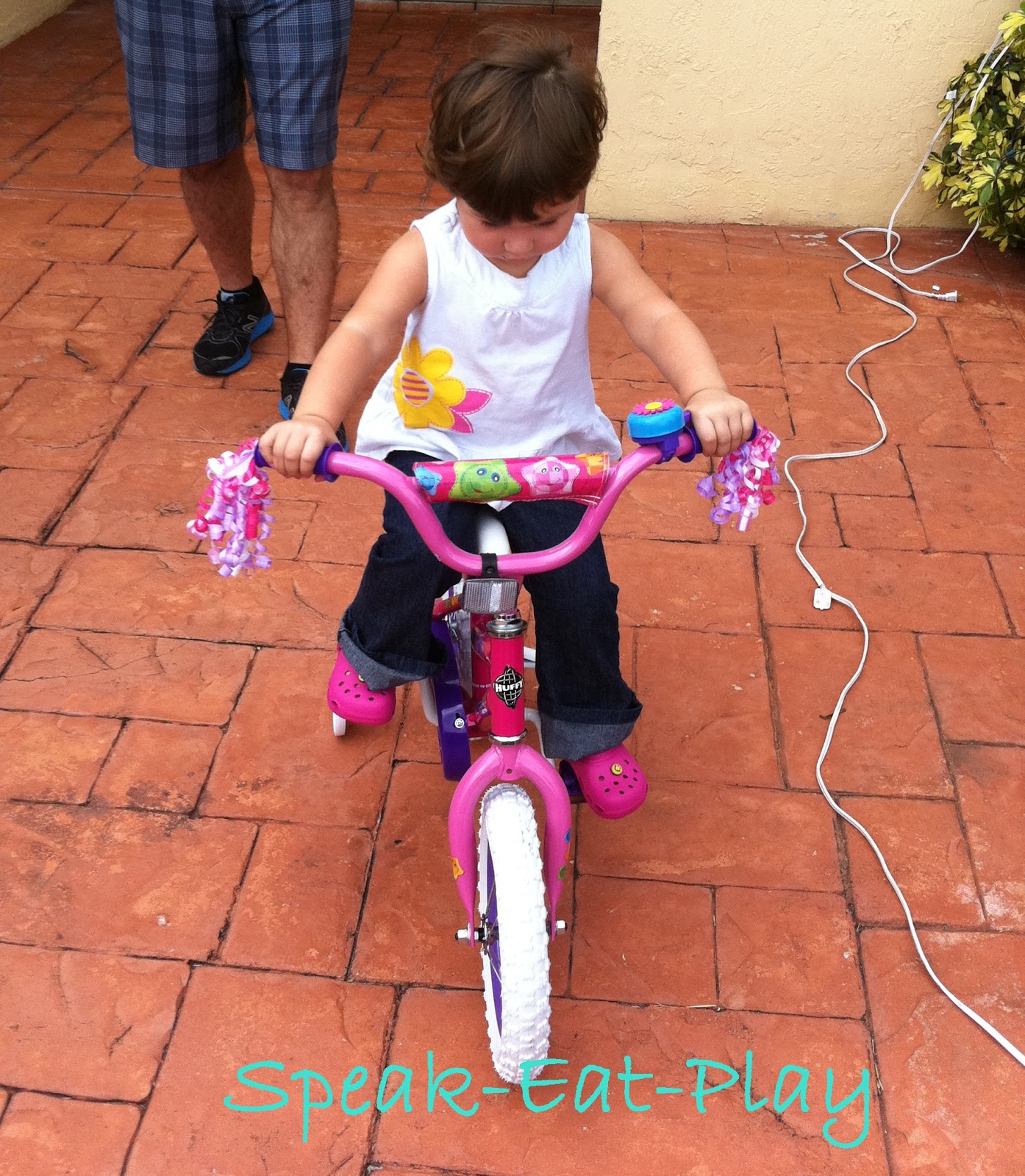
  • Ride bicycle
 

    Games and toys

    • Blow bubbles and have child pop by clapping


    • Play finger games (Itsy Bitsy Spider)
    • Sew or string beads
    • Snap/Pop beads
    • Lego’s
    • Playing 2 handed musical instrument (drums, recorder, piano, guitar)
    • Push a cart (play stroller, shopping cart, lawn mower, etc.)
    • Play videogame with controller
    • Remote control car, plane or boat
    • Fly a kite
    • Create “jungle”- clear cushions off couch and chairs and have child crawl and climb through “jungle”
    • Make sand castles at the beach
    • Crawl through a maze
     
    • Scooter board game
     
    • Wheelbarrow walk
    • Play Simon Says
    If you have any questions, please don’t hesitate to contactme at speakeatplay@gmail.com. As always please consult your child’s physician before any activity.

    If you like our posts be sure to follow us.

    Source: Case-Smith, Jane. Occupational Therapy for Children,6th edition.
    Pin It!

    Saturday, February 9, 2013

    Meal Time Tips for Picky Eaters

    Pin It!

    Making Meal Time with your Picky Eater Easier

    by Karina Gonzalez, MS CCC-SLP

    Having a picky eater can be very stressful at times, but there some simple changes you can make that may help. Here are a couple of tips I have learned about that will make meal times easier.  

    ·        Focus on making meal times enjoyable andrelaxing: play games, lay out food in the shape of a happy face, have a contest. Make it fun, fun, fun!

    ·        Reward your child for every bite he takes, youcan praise him or high five.

    ·        Battles and forcing your child will only make apicky eater pickier. Keep it positive and fun!

    ·        Do not bribe your child, this will only make himmore aversive to food, just simply let him try the food on his own terms. Youmay need to present the new food 10 times before he will try it.

    ·        Offer new foods when your child is hungry andrested.

    ·        Give only 1 new food at a time.

    ·        Give the new food with favorite foods toencourage acceptance.

    ·        Show him you like the new food. Take a bite, andsay “delicious”.

    ·        Encourage your child to play with the new foodand allow him to get messy. (Have you read my post about playing with food? read it HERE.

    ·        Use dips or sauces. Read my post on how much fun ice cube trays can be,HERE

    ·        Limit the amount of liquid your child eats,often times they get full on liquids and will not be hungry enough to eat.

    ·        Have a feeding schedule of 3 meals, limitsnacking to 2 times per day and try to eat at the same times every day.  Having this schedule will allow your child toget hungry between meals.

    ·        Feed your child at the same time as the rest ofthe family. Also, at the dinner table for every meal. Avoid eating on thecouch, or in the play room.

    ·        Allow your child to help you cook and servefood.

    ·        Have “lunch dates” with your child and otherchildren. Children copy from each other!

    ·        Change something about his favorite foods, like:shape, color, brand, or size, so that your child does not get tired of eatingthe little bit of foods he enjoys.
    • If you have a picky infant you can try a mesh feeder, read HERE.
    • Be sure to also read my post on pacifier use and how it can affect your child's feeding, HERE. As well as when to stop the bottle, HERE.

    I hope these tips can help make meal times a little easier for you, if you need individualized help pleasecontact me speakeatplay@gmail.com . And remember, having a picky eater is very common and is normalpart of childhood development.

    Do you think your child's picky eating is a cause for concern?, please read HERE.
    Be sure to sign up to receive blog posts in your mailbox.
    Pin It!