Monday, January 16, 2017

Why is imitation important for child development?

My 15 month old daughter, Maya playing with our dog Bailey...


I love how she is imitating the dog rolling on the floor! This is an example of typical play and social skills development. Imitation is very important, without imitation skills kids will have a difficult time learning, and developing their communication and play skills. You should see your baby begin to imitate simple movements (such as clapping) or facial expressions as early as 5 months!

Does your child have good imitation skills? Speak to your pediatrician if you have any concerns whatsoever, they should be able to tell you if your child's imitation skills are on track.

Tuesday, July 29, 2014

Top 5 Books for Speech Delays

How to Use Books for Speech Development.

by Karina Rodriguez-Tellaheche, MS CCC-SLP

 
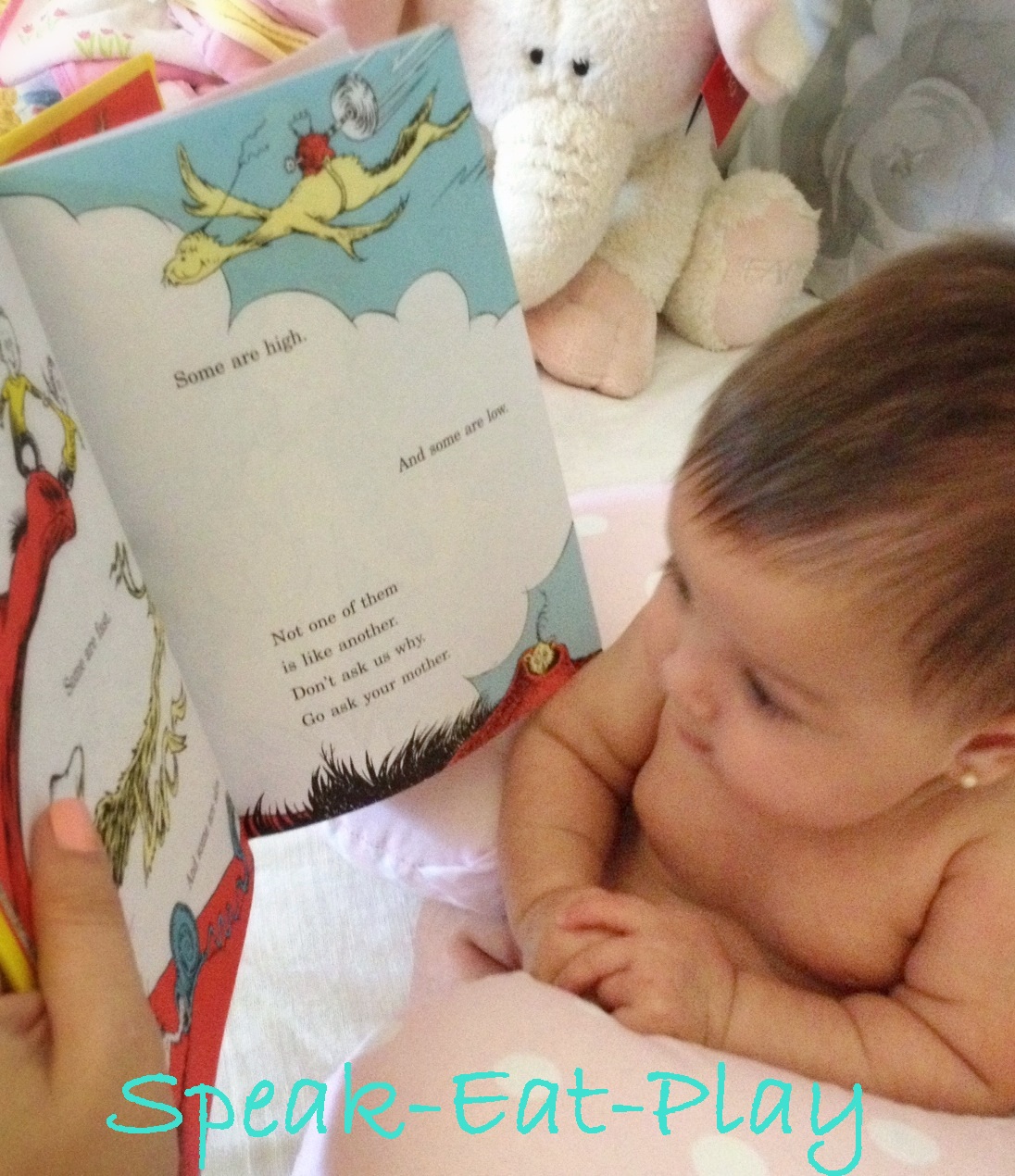
 I love to use books in my therapy sessions.  Books are great for many things, including literacy development, increasing joint attention, building social skills and speech development. Using a book to improve your child's speech and language skills is fairly simple, as you will see in my examples below. But first, there are some requirements. Your child will need to stay focused on the book, make sure there are no other distractions. Turn the TV off and hide the more motivating toys. Keep in mind that the younger your child is, the shorter the attention span. Toddlers can only maintain attention for a few minutes, so you will have to choose books that only have a few pages and with bright colors. When choosing books for children with speech delays, it is important to look for books that have repetition, this is one of the techniques speech language pathologists use in therapy. This is because children with delays need to hear a word or phrase multiple times in order to learn it. Repetition also adds predictability, you will notice that after reading the same book several times your child will start to learn the word and fill in the blanks.  If your child has been diagnosed with Apraxia, using books with repetition is a very effective technique. Below are other techniques that can help children diagnosed with Apraxia. 

First read the book slowly and with lots of emphasis on words, sounds and emotion. Also exaggerate your facial expressions and add hand movements. Using my hands to gesture along with the book, motivates the child to do the same. Be sure to use the same movements, sound and facial expressions every time. After reading the book, the first few times, you may not get much participation, but slowly your child will begin to join in by imitating your hand movements, your facial expressions and slowly your words. I also pause before some key words and allow the child a chance to fill in the blank. After a few tries, they will!  Be as fun and silly while reading, this will motivate your child to sit and look at the book with you. So until your child becomes an avid reader, you will need to provide the motivation. 

Here is my list of top 5 books for promoting speech development.  These books are available on Amazon.com. If you click on the tittle it will direct you to the link.


Peek-a-Who? by Nina Laden: (Buy Here) This is a great book for infants, young toddlers and any child that is not yet talking or using only a few words. It's very simple, it only has about 6 pages and only 3 words per page, so it's great for little ones with short attention spans. This book is also perfect for repetition and prediction because it uses the same phrase over and over.  The last page is a lot of fun because it has a mirror that kids love to see themselves in. Remember to use gestures, for example, put your hand up and pretend to toot the horn of the train for "peek-a-choo".


Brown Bear, Brown Bear, What Do You See? by Bill Martin, Jr. (Buy Here) This Book is a classic and one of my staple therapy materials. It is a great book for any age, but it is especially great for teaching little ones how to put 2 word sentences together, for example "brown bear" "black sheep", etc. It is also great for vocabulary development as it teaches animal names, colors, actions and pronouns. It is a great book for gestures as well, you can gesture "what do you see?" by pointing to your eyes, or point to yourself when you read "looking at me".


 Where's Baby's Belly Button? by Karen Katz (Buy Here).The flip pages in this book make it very fun and interactive for little ones. It's great for learning body parts and learning to ask questions. Kids love to look for the hidden objects and get very exited when they find them. This author has other editions "where's baby's Mommy?" and "Ears, nose and toes?" you can purchase the bundle of all 3, HERE.


 Five Monkeys Jumping on the Bed by Eileen Christelow
(Buy Here). I use this book with the bigger toddlers and preschoolers to teach them to put words into short phrases. It has a lot of repetition and it is great for teaching number knowledge and counting skills. I use finger puppets and we remove them as they start to "fall off the bed". You can find these adorable matching finger puppets, HERE
 

 The Wheels on the Bus by Annie Kubler (Buy Here). This is a classic children's song used in preschools everywhere. So I tend to sing it when I read it. The reason I love this book is because of all the hand gestures and movements. So I use it with non-verbal kids who are not saying much to focus on imitation skills. Once they get very good at imitating my hand movements they usually begin to imitate the words as well. I also like the book because it has a lot of non-verbal sounds, like 'swish swish" (wipers) and "waa waa" (baby crying). Non-verbal words are typically learned before real words because they are easier and more motivating to say. So if your child is not saying many words, be sure to practice these and other non-verbal words and sounds over and over again. 

I hope you find this list of top books for speech delays useful and that you are able to use it with your child daily. Please be sure to comment if you have any questions or need further clarification on how to use these books.


Be sure to read my other posts on speech development :

Top 10 Apps for Speech and Fine Motor Development

Increasing Your Child's Vocabulary


Be sure to follow us by email to get updates on giveaways and future posts. 


Don't forget to leaver your comments or questions below.

Thanks For Reading!


Sunday, September 15, 2013

Myths of Bilingualism and Speech Delays

Living in Miami we get asked all of the time if language delays are caused by learning more than one language. Given that this is a big misconception we thought it would be a good idea to get all of the myths of bilingualism debunked. So we interviewed an expert in this subject, speech-language pathologist Jennifer Rodriguez, M.A., CCC-SLP and she was nice enough to share her knowledge with us (you can read her bio at the end of this post). We compiled a list of most frequently asked questions and here is what she had to say...


Q: Will learning two languages cause speech or language impairments? 

A: No.  This is a big misconception and myth.  It is counterintuitive as one may think bombarding the system with two languages will cause a delay.  However, there is no research to support this.  There is no research that shows that hearing or learning more than one language will impair you or delay you.  If a child has a true language learning delay, this delay will manifest itself in both languages. Millions of people worldwide have learned multiple languages without acquiring a delay or language impairment.  Even children diagnosed with language impairment are capable of acquiring more than one language. Research has shown that bilinguals with diagnosed language impairment actually do better in the long run than their monolingual counterparts.
Bilingual children with language impairments showed commensurate language skills to monolinguals with language impairments (Paradis, 2005).
Bilingual children with language impairments exhibited same type and frequency of grammatical errors as monolinguals with language impairments (Paradis,Crago, Genesee, & Rice, 2003).
Bilingual children with Down Syndrome (DS) showed commensurate language skills to monolingual children with DS (Kay-Raining Bird, Cleave, Trudeau,Thordardottir, Sutton, & Thorpe, 2005).
  * 5 year study of bilinguals at Cornell Language AcquisitionLab revealed that learning a second language does not have any negative effect on child’s cognitive ability.

Q: Are there any benefits to being bilingual?

A: Many! It promotes mental agility and helps delay neurological disorders like dementia and Alzheimer Disease.Research has consistently shown that bilingual children typically have improved working memory (WM) and executive functioning abilities.  The enhanced ability to process sounds, another benefit of being bilingual, is a big advantage with regards to language acquisition. According to the American Psychiatric Association, bilinguals can actually pay attention better. This combined with the optimized brain capacity and increased concentration through the neuroplastic workout really lends itself to learning better in general. In addition, bilinguals have more career opportunities than monolinguals.

Q: My child is speaking “Spanglish” or mixing both languages.I’m concerned that he may be getting confused? What do I do?
A: Let us first discuss what is “Spanglish” or better known as Code Switching.  “Code-switching is a verbal skill requiring a large degree of linguistic competence in more than one language, rather than a defect arising from insufficient knowledge of one or the other… Rather than presenting deviant behavior, [it] is actually a suggestive indicator of degree of bilingual competence.” (François Grosjean)  Why do we do this? Well there are various reasons why. Code-switchingis a sign of mastery of two linguistic systems, not a sign of language confusion. Children as young as 2 years old are able to code-switch in socially appropriate ways (Lanza, 1992). Sometimes the other language has a better word or phrase to express a particular idea.  Sometimes the words we code-switch are the only ones we have, or they are more readily available in the other language.  Occasionally, we code-switch as a communicative tool, including to exclude someone or to show expertise. Children are products of their environments.  If they are constantly hearing “Spanglish,” then they will pick it up.  It is, however, natural for them to mix them as they are acquiring both and make errors such as “the house red” instead of “the red house.” It is important to remember that in terms of raising bilingual children, the experts agree that while they’re learning both languages, it is better if they’re exposed to each of them in a monolingual setting. In other words, children learn by example, so the less mixing you do, the less mixing they’ll do—at least until they become proficient in both languages.


Q: My child has a language delay.  Should I use only one language when speaking to him?
A: Many people, even professionals, believe that reducing to one language in the home will improve your childs chance for success, however,  this may have a negative impact on the child. This may cause a social emotional impact for child and family as it will result in reduced capacity and quality of communication with the family.  For example, if a parent only speaks Spanish but the child is delayed  in school and a professional told the parents to only speak to the child in English, how would that parent be able to communicate with the child? Also, if the parent is not proficient in that language what type of example are they setting for that child? Communicating in the language they speak best offers rich language and grammatical models. Moreover, reducing to one language may negatively impact  the child, decreaseself-esteem, and decreasing identity with community and culture.

Q:5. Can I hire a speech therapist to teach English to my child?
A: No,  that is the role of an English teacher or ESOL teacher.  Alicensed Speech-Language Pathologist should only treat children with a diagnosed speech and language impairment in that specific language.  Let’s say I evaluate a child in both English and Spanish. Results from that evaluation revealed that the child tested within normal limits in Spanish and was delayed in English.  Would they have a true language delay requiring speech therapy? Absolutely not.  Remember this.  A true language delay will manifest itself in both languages.  That is why it is important to look at the bilingual child’s both languages to determine if there is true language impairment or if they “appear” to be delayed secondary to second language acquisition.

How to foster a bilingual Environment:
Key ingredients: input ,exposure  and consistency no osmosis here 
Unrealistic to expect your child to learn Spanish by watching countless hours of Dora The Explorer
Children will develop a language if they feel they need it
If you create the need for more than one language the children will become bilingual
Make it a natural and unremarkable part of life


References and more information/links:


Jennifer Rodriguez, M.A., CCC-SLP, has been a bilingual speech-language pathologist at Miami Children’s Hospital-main campus over the past 6 years. She received her Master’s degree in Speech-Language Pathology at Temple University and was dually enrolled in the Bilingual Emphasis Program. Moreover, she has been published in the American Journal of Speech Language Pathology and has been active in the bilingual community by providing in-services, attending bilingual symposium conferences, and demonstrating best practices in assessment and treatment of bilingual populations.


Sunday, August 25, 2013

Top 10 Apps for Speech and Fine Motor Development

Guest blogger and Speech-Language Pathologist, Mailin Justiniano, shared with us the top 10 apps for speech and fine motor development... 

I’m sure we all know what an iPad is,if you don't, I highly recommend getting one. This amazing tool has attracted people as young as babies, up to my grandfather’s age! I recently showed my grandfather the Galaga game and he was thoroughly entertained for quite some time. If you simply show this simple device to a child, you can see their eyes light up with wonder.

It all started when the iPad was given to me as a graduation gift a few years ago, and it has been such a wonderful resource since! Over the last few years, I have downloaded and trialed several apps. I’d like to share with you my top 10 favorite apps for development!


1.       Peekaboo Barn for $1.99 It all starts with Animal Sounds! This app is wonderful because it allows you to work on animal sounds in a very fun way! This app is great for visual stimulation and has an auditory presentation prior to demonstrating the picture/label for the animal. 
 
  
2.       iMommy App Lite version (free) iMommy $1.99 I LOVE this app! This app is great for eye hand coordination, naming objects and increasing understanding actions! I like to use this app while I use simple language models, such as “the baby is laughing”, “let’s wash the baby” and to follow directions such as “turn off the water.” 


3.       First Words Deluxe $4.99 This app is wonderful as it contains vocabulary from a variety of categories. You can choose animals, things in the home, colors,shapes or other categories. This also helps children develop phonemic awareness.


4.       Actions Flashcards Kindergarten.com app $1.99 This app is an excellent tool to help children improve comprehension/understanding by learning actions. To make this app even more interactive, you can have the child push an action and then proceed to act it out. This would make for a fun activity taking a
whole body experience approach to keep your child interested and involved.

 
5.       Caillou’s World $2.99  Caillou’s world is a great app to assist in Identifying letters. It also assists with visual discrimination as the child needs to search for the item that is flashing in color with a black and white background. Once the child clicks on the picture, he/she is able to view the spelled word and must find the first sound of the word. For example, “Sunflower. Sunflower starts with the letters S.” The child must then match the correct letter with the first sound in the word. Kids really enjoy this app!


6.       Articulation Station $2.99/3.99 or 5.99 per letter sound. This app is particularly helpful if your child is having a difficult time with a specific speech sound. I truly believe in this app. I helped a child who was unable to say his k’s and g’s by using this app. The greatest feature is that you are able to record and play back a child’s production of the word and they are able to hear themselves.  This auditory feedback is a wonderful feature that allows children to compare the way the word should sound (model on the app) versus the way they might be pronouncing it. 
 
7. Barbie I can Be FREE. This app can be used to teach children how to sequence steps. Most of the time, I use this app as a reward since it seems to be a favorite amongst the girls. Implement this as a reward for completing an educational program or homework. They can choose to either make a pizza, bake a cupcake or be a Veterinarian. It also helps with developing eye-hand coordination. The best part is it’s free!


8.       Little Writer FREE This app is fantastic for teaching fine motor skills. Children must follow the line to create a letter. The graphics are colorful and neat!  This will help with eye hand coordination, and overall fine motor skills.

9.       Laugh & Learn. Where’s puppy’s nose? For baby By Fisherprice, FREE. This app is geared towards the little ones starting to learn body parts. I think it’s great because of how interactive it is and how the animals are very animated. It’s a simple concept, to help kids learn parts of the body. I like this one. It's a must have!

 
10.   Fitquest Lite- FREE Get your kids moving and grooving! I recommend having a safe case for your iPad should you choose to use this game. This game allows your child to get active, and works on gross motorskills such as walking, hopping and ducking. The music is cute and one of the games requires the child to jump over a snake. This is great exercise for your kids instead of having them sit down while using the iPad.

I hope you find this list useful! Please share your ideas, comments or suggestions below. We would love to hear from you!

Mailin Justiniano, M.S.,CCC-SLP
Hanen Certified Speech-Language Pathologist.
 
Mailin is a Speech-Language Pathologist who has come to embrace the technology side of treatment! She loves finding new apps to assist children in reaching their maximum potential in therapy. She is Hanen-certified and enjoys working with kids. She has experience with a variety of diagnoses and disorders such as Cri Du Chat, Autism, language delay, Selective Mutism, Auditory Processing, Down's Syndrome, Articulation, Fluency and many more.  Her favorite part of being a speech therapist is being able to "play with a purpose" and educate parents.  

Sunday, August 4, 2013

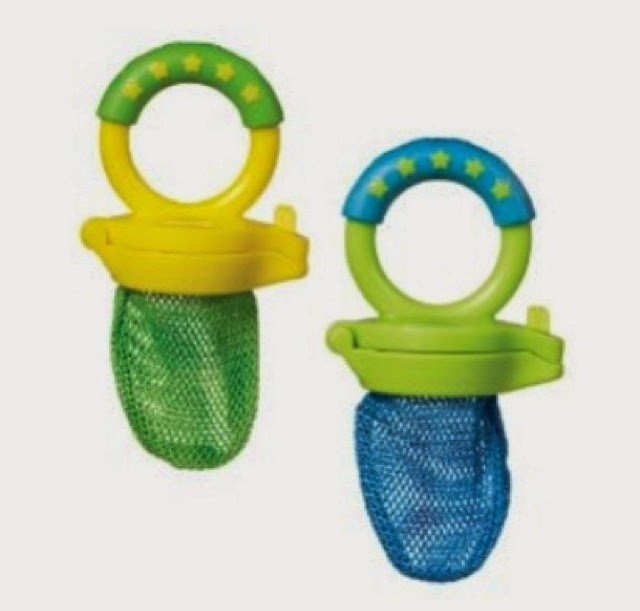
Mesh Feeder Giveaway

Want to win a pair of  mesh feeders?
Visit and like our Facebook page www.facebook.com/speakeatplay and comment below. Winner will be announced Sunday August 18th at 10pm eastern time. Good Luck!

(**UPDATE, this giveway has ended,  we are sorry you missed it, but you can purchase these mesh feeders, HERE. You can also read our post on why we love them so much, HERE.  Be sure to follow us for future giveaways).

Saturday, July 13, 2013

Tortle Winner!

Congratulations Doris Thompson! you are the winner of our Tortle Giveaway (please contact us speakeatplay@gmail.com by 7/15/13 at 10:00pm eastern time or we will select a new winner). Thanks to everyone else for entering and for your great feedback, please continue to read our posts for future giveaways. Thank you www.Tortle.com for the great donation.

Sunday, July 7, 2013

Tortle Giveaway! (positional plagiocephaly)

FREE GIVEAWAY!!!! (***update...this giveaway has ended, but you can still purhcase a tortle, HERE. Be sure to follow us by email so you can get updates on future giveaways)

Thanks to Tortle for providing us with a Tortle for one of our lucky readers!!! Read below for a chance to win.


picture source: http://www.tortle.com/

Positional plagiocephaly (flat head) and torticollis has become a big worry for parents lately especially due to the back to sleep campaign, to learn more about it read our post, HERE. All babies are at risk especially those that are premature or from multiple births. Studies show that plagiocephaly and torticollis have an increase in developmental delays.  There are different lifestyle changes that you can make to prevent a flat head and torticollis. The best way to prevent plagiocephaly is to be very consistent with repositioning your child, and lots and lots of tummy time! Remember you can start tummy time right after birth to strengthen baby’s muscles! As an occupational therapist, we always recommend limiting the amount of time that your baby is in a stroller, car seat or bouncy seat. But, with our busy lives it is often inevitable that your baby will need to be in one of these resting positions for long periods of time.

Dr. Jane Scott is a Pediatrician, mother of 4 has created the Tortle. The Tortle is a beanie that helps with preventing flat head and torticollis when your baby is in resting positions. Thank you to Hilary Abbott Company, Inc for providing us with our very own Tortle to giveaway to a lucky reader! Keep reading for entry details.

For more information and to purchase a Tortle please click, HERE.

What Is Tortle?

Tortle is a simple, comfortable beanie that helps prevent and treat early stages flat head syndrome: plagiocephaly & torticollis. It makes the job of repositioning newborns safe and easy.

It is recommended that all newborns wear a Tortle for the first few months of life to aid in repositioning; which supports healthy development. Tortle works by gently deflecting your baby’s head when she's sitting or lying on the back of her head, to gently move her head from side to side.

The incidence of plagiocephaly and torticollis (or flat head syndrome) has increased by 600% since 1992 due to the amount of time infants spend on their back (the safest place to be). However, if left untreated, treatment is expensive and can be hard on the baby. Moreover, long term developmental delays can occur. But plagiocephaly and torticollis almost 100% preventable with repositioning, which Tortle makes easy.


How Do I Use It?

• Put the beanie on your baby when lying awake (such as on the floor or in a bouncer or swing), sleeping with your supervision, or traveling in a car seat or stroller.

• Align the support roll behind one ear, then at feeding time, switch sides so she doesn’t begin to favor a position. Tortle is not intended for overnight use.

• If your baby has developed some flattening or plagiocephaly, use the Tortle to position the head preferentially to the other side. Once the flattening has improved, then return to alternating it side to side.

• The patented support roll aids in repositioning: it’s firm enough so she won’t roll over, and soft enough to encourage natural, comfortable movement. 

I was able to take a look at the Tortle and here are my thoughts:

I often recommend parents to use a blanket to help positions babies in certain positions but this is a lot easier to use correctly. It’s also great for prevention as long as the caregivers are consistent with alternating sides. It is very lightweight and won’t overheat easily it’s perfect for babies that have a preferred side. Also it allows baby to move freely.

Overall, I wish I would have had the Tortle when my daughter was a newborn it would have decreased my anxieties of having her in the car or stroller for long periods of time.

If you suspect your child has positional plagiocephaly or torticollis, talk your doctor as soon as possible and see an occupational therapist, or contact us speakeatplay@gmail.com, for positional changes as well as to determine if there are any developmental delays.

Monday, July 1, 2013

Ice Cube Trays for Meal Time!


By Karina Gonzalez, MS CCC-SLP


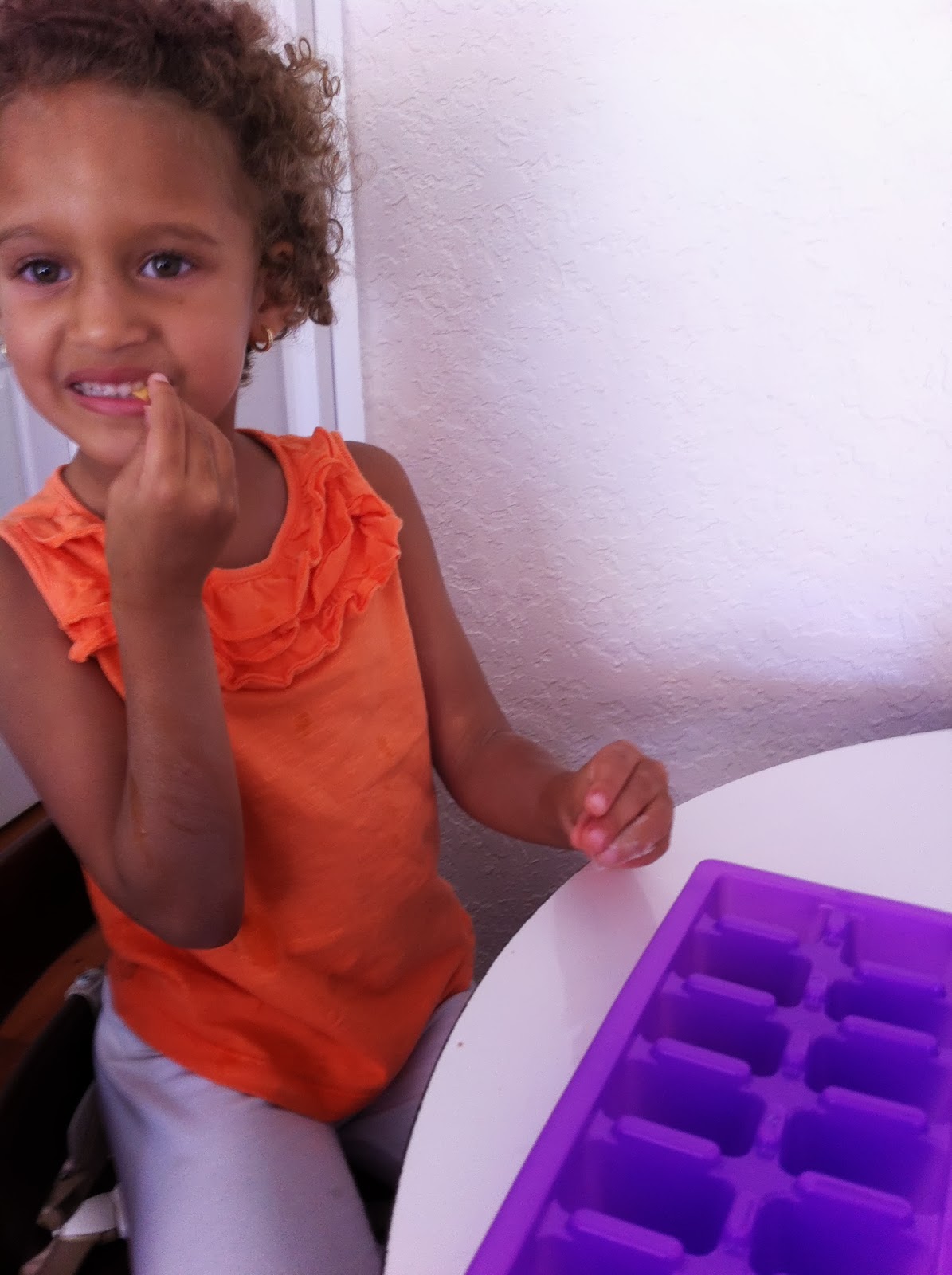
I want to share a great motivational feeding tool that only costs a dollar! Ice cube trays! I started using them recently in my feeding sessions and they have been working out great! I use them with both picky eaters and with children that have issues with pacing and overstuff their mouths.
For picky eaters, I find that when you use an ice cube tray instead of a plate, they are more open to trying the new food. The spaces allow you to place the bites individually and to a child with food aversion, it is not as scary as having all the food bunched up on a plate. They also provide the child with a visual of when he is done with the meal. You can fill all the spaces or just a few, and your child will know that once he finishes all the pieces, he is done! This usually gets them more motivated to participate. Plus, it’s just more fun than a plate!


Whenever I introduce a new food, I always start small (think crumb size) and I start with only 5 ice cube spaces. At the following meal, I will increase it to 6 and so on. I will also increase the size of the crumb to the size of a pea, then dime, etc. If your child is not doing well with the smallest size and quantity then you will need to stay at this level for a few more meals.
On the other hand, if your child overstuffs his mouth, you can use the tray to remind him to take “one bite” at a time. You can cover the holes with your hand or a paper showing him only one at a time. Tell him to chew and swallow before opening the next hole.

If your child needs more motivation, purchase these robot ice cube trays for boys HERE and princess trays for girls HERE.

I hope this simple tool can make meal times more manageable. Please comment below, we love to hear your thoughts.

Have you read my post on making meal time fun, HERE? and Food Play for Picky Eaters, HERE 
Also take a look at these fun face plates,HERE

As always, we are here to help you may contact us with any questions or concerns speakeatplay@gmail.com

Pin It!