We have a prize for a loyal reader!
As our way of thanking our readers, we are giving away a $10.00 Starbucks gift card (You deserve a coffee break!). It's simple to qualify, all you have to do is sign up to receive our posts via email (scroll down and find the "follow by email" link on the right side of this page). That's it! We will announce the winner on our facebook page https://www.facebook.com/speakeatplay on Sunday May 26.
Signing up for our email feeds is a great way to stay up to date with all of our post and to make sure you don't miss out on good information.
Thank you and Good Luck!

Showing posts with label infant. Show all posts
Showing posts with label infant. Show all posts
Wednesday, May 22, 2013

Thursday, May 2, 2013
When to Stop Using a Baby Bottle???
By Karina Gonzalez, MS CCC-SLP


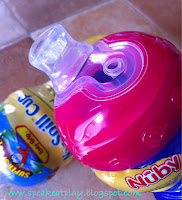 Around the same time, begin to replace the bottle with a sippy cup, although not a better solution, I like sippy cups because they come with spill proof options, making it more realistic that cup or straw drinking when you are on the go. Remember, as soon as your child is able to hold and drink from a cup or straw, spouted sippy cups should be discontinued. If your child is having a hard time transitioning to a sippy cup, I recommend the Nuby Super Spout Easy Gripper. These cups have a soft silicone spout that makes the transition from bottle easier as it resembles the nipples from a bottle. The spout is also designed to put little pressure on the gums and teeth. These cups have an easy grip which encourages hand to mouth coordination. The “TOUCH-FLO” feature releases the fluid with the pressure of your child’s sucking action, when your child stops sucking, the spout closes, eliminating leaks. This “valveless”, design makes it easier to clean. These Nuby cups are also very affordable, as it is one of the company’s missions to provide affordable quality products that are designed with child’s development in mind. You can purchase Nuby sippy cup, HERE.


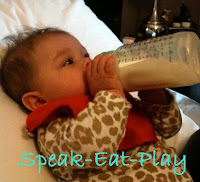
One of my last blog posts was about the importance of eliminating a pacifier and the havoc they can wreak in your child’s mouth. Well, I’m here today to tell you about another culprit…the baby bottle! Bottles are great for infants, hey, it’s the main source of nutrition for newborns if they are not breast fed, but when should you wean them off? And what’s the big deal if you let your child drink from a bottle well into toddlerhood? I remember my Mom letting me drink chocolate milk from a bottle before bed at 5 years of age! And I remember loving it! But it turns out that was not such a good idea and I’m here to hopefully answer some of these questions and persuade you to help your child kick the bottle habit.

First off, why should you wean your baby from a bottle? Well, if you have not read my post about pacifiers please click here, in this post I talked about the different dental malocclusions that pacifiers as well as bottles create. These malocclusions not only distort the shape of your child’s teeth, but they will also lead to tongue protrusions which can interfere with spoon feedings and speech delays in the future. Another important reason is that prolonged use of bottles leads to tooth decay, especially if you are offering sugary or acidic drinks like juice or chocolate milk. Hence why I had so many dentist visits! Not fun, very painful and expensive! Lastly, your child will be missing out on the opportunity to become a proficient cup and straw drinker.
So on to the next question…when should you eliminate the bottle?
Depending on who you ask, you will get different answers, but ideally bottle drinking should be discontinued by 12 months of age.
So how do you achieve this? Well, here’s my suggestion:
Begin to introduce open cup drinking around 6-7 months of age. Provided that your baby has good head control and can sit independently. Offer small, slow, controlled sips. Your child will have poor control and most of it will spill out, but with consistent practice, he will become better at it. A great training cup for your child is a nosey or flexi cup. They have a cut out so that you are able to tilt the cup higher without hitting your child’s nose. These are a staple in a feeding therapist bag of tricks. You can find them, HERE.
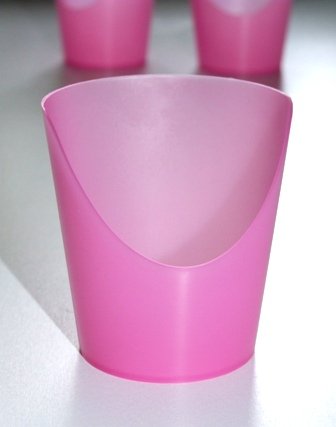 |
| Picture credit: amazon.com |
Practice cup drinking in the tub, this is a great way to not worry about the mess! Cup drinking also helps to develop hand coordination and encourages the transition to solid food.
 Around the same time, begin to replace the bottle with a sippy cup, although not a better solution, I like sippy cups because they come with spill proof options, making it more realistic that cup or straw drinking when you are on the go. Remember, as soon as your child is able to hold and drink from a cup or straw, spouted sippy cups should be discontinued. If your child is having a hard time transitioning to a sippy cup, I recommend the Nuby Super Spout Easy Gripper. These cups have a soft silicone spout that makes the transition from bottle easier as it resembles the nipples from a bottle. The spout is also designed to put little pressure on the gums and teeth. These cups have an easy grip which encourages hand to mouth coordination. The “TOUCH-FLO” feature releases the fluid with the pressure of your child’s sucking action, when your child stops sucking, the spout closes, eliminating leaks. This “valveless”, design makes it easier to clean. These Nuby cups are also very affordable, as it is one of the company’s missions to provide affordable quality products that are designed with child’s development in mind. You can purchase Nuby sippy cup, HERE.
A better solution is a straw drinking. Any speech-language pathologist can tell you how great drinking for a straw is for your child’s oral motor and feeding skills. Straw drinking can be taught as early at 9 months, I have seen babies learn before and some after, but a child should learn it on their own by 2 years of age. Don’t worry if your child can’t get the hang of it at first. It may take a while but with practice he will begin to understand the concept. Contact us if you need help with teaching your child to drink from a straw. Once your child can drink from a straw you can purchase cups that have straws that flip closed and not worry about spillage, like this great Munchkin cup, HERE. Take a look at these fun straws, HERE.
Here are some other tips on bottle weaning…
· Start early, the longer you wait the harder it will become. The older the child the harder the fight.
· Don’t always offer juice or water in a cup and the milk in a bottle, this will lead to your child refusing to drink milk from a cup.
· Be patient! Cup and straw drinking is a learned skill, your child will need lots of practice. Be prepared to get messy.
· If your child is old enough, let him help you select the cup, he will be more likely to use it.
· Offer your child the cup first and give the bottle only if he rejects it.
· Try to avoid getting your child used to falling asleep with a bottle, this will create a dependency to be soothed by the bottle and getting rid of it at this time will be a struggle. Instead offer the last milk of the day via a cup 30 minutes before bed time and offer other soothing sleep time routines like reading a book.
· Do not let your child crawl, walk or play with a bottle, this may create an attachment to it.
· Try different cups or sippy cups, some have straws, some handles other don’t, the options are unlimited. You will soon discover which one works for your child.
Good luck! And I hope the transition is an easy one. Remember to be patient and offer your child lots of cuddling and encouragement during the process. His teeth and mouth will thank you in the long run.
As always we are here to help, please contact us at speakeatplay@gmail.com
How did you get your child to stop using a bottle? Please comment below we love to have more ideas.
Friday, March 29, 2013
Positional Plagiocephaly
Does your baby have flat areas on his head (Positional Plagiocephaly)
By Jackie Gurdian, MS, OTR/L
Childbirth is an adventurous ride for your baby and sometimes it results in your newborn looking like a cone head, but don’t worry, because your baby’s skull will even out on its own.

Some babies develop a flat area after birth, this is called positional plagiocephaly. Flatness can occur on either side of the back of the head.
Why does this occur?
One of the main reasons why babies develop flat areas is because they sleep or rest in same position repeatedly. It is not recommended that babies spend too much time laying on their backs when they are awake, or anywhere where their head is laying head against a surface.
Another reason is having weak neck muscles. Your baby could be having difficulty turning his head to both sides. This can lead to torticollis, other times the child has torticollis which leads to flatness (information on torticollis coming soon).
Prematurity is also another reason that plagiocephaly can occur. Premature babies have softer skulls than most full term babies and possibly could be spending time in the neonatal intensive care unit (NICU) where they are unable to move from the same position for long periods of time.
Positional plagiocephaly can also occur in utero when there is pressure placed on your baby’s skull.
What do you do if you suspect your child may have positional plagiocephaly?
This could be very easy for you to notice. Most of the time you will see a flattened side and this may cause that side to look pushed towards the front of the face. You may also notice asymmetry when looking at the face in frontal view.
If you suspect your child may have a “flat head”, ask the doctor. The doctor could recommend simple positioning changes to make around the house or possibly a custom molded helmet to provide pressure on some areas and allow growth in others.
How can you prevent positional plagiocephaly?
· Lots and lots of tummy time to not only prevent baby being on his back for so long but also to strengthen their neck muscles. You could also try baby carriers when you need to be on the go.


· Try putting baby at different ends of the crib every nap or bedtime. Usually if you are right handed you will place child in crib the same way every time try and alternate what arm you use to hold baby.
· Limit the time that the baby is in equipment such as car seat, bouncy chair, swing or other similar seats.
· If you have crib safe toys, alternate sides in which baby will have to look to play.
- Use a product like the Tortle, a beanie especially made for positional plagiocephaly, we wrote a review about it HERE.
If you would like more information on different positional adjustments to make for your child please contact us speakeatplay@gmail.com. We will also love to read your comments and any other suggestions you have tried.
Be sure to like our facebook page for updates and other informational posts www.facebook.com/speakeatplay
Thanks for reading!
Friday, March 1, 2013
Playing with your Newborn
10 Fun and Interactive Ways to Play with your Newborn
It might be hard to believe but your newborn wants to play. I’m not talking playing a game of Monopoly but playing peek-a-boo is her idea of a fun night. For these games there is no need for fancy toys (the toys you registered for and found out later that your baby rather play with a box), instead you will be her favorite toy.
First, lets answer this question, why is play important?
Play is the way that newborns learn how to communicate, socialize, move and understand what is going on around them and socializing with you is the best way for baby to learn. Stimulation is very important for baby’s well-being and many studies show babies who are stimulated reach physical and cognitive milestones earlier.
Now, the fun stuff below is a list of games that my daughter loved to play as well as some ideas from other parents.
Sunday, February 17, 2013
Pacifier Use and Speech Development
What you may not know about a pacifier
by Karina Gonzalez, MS CCC-SLP
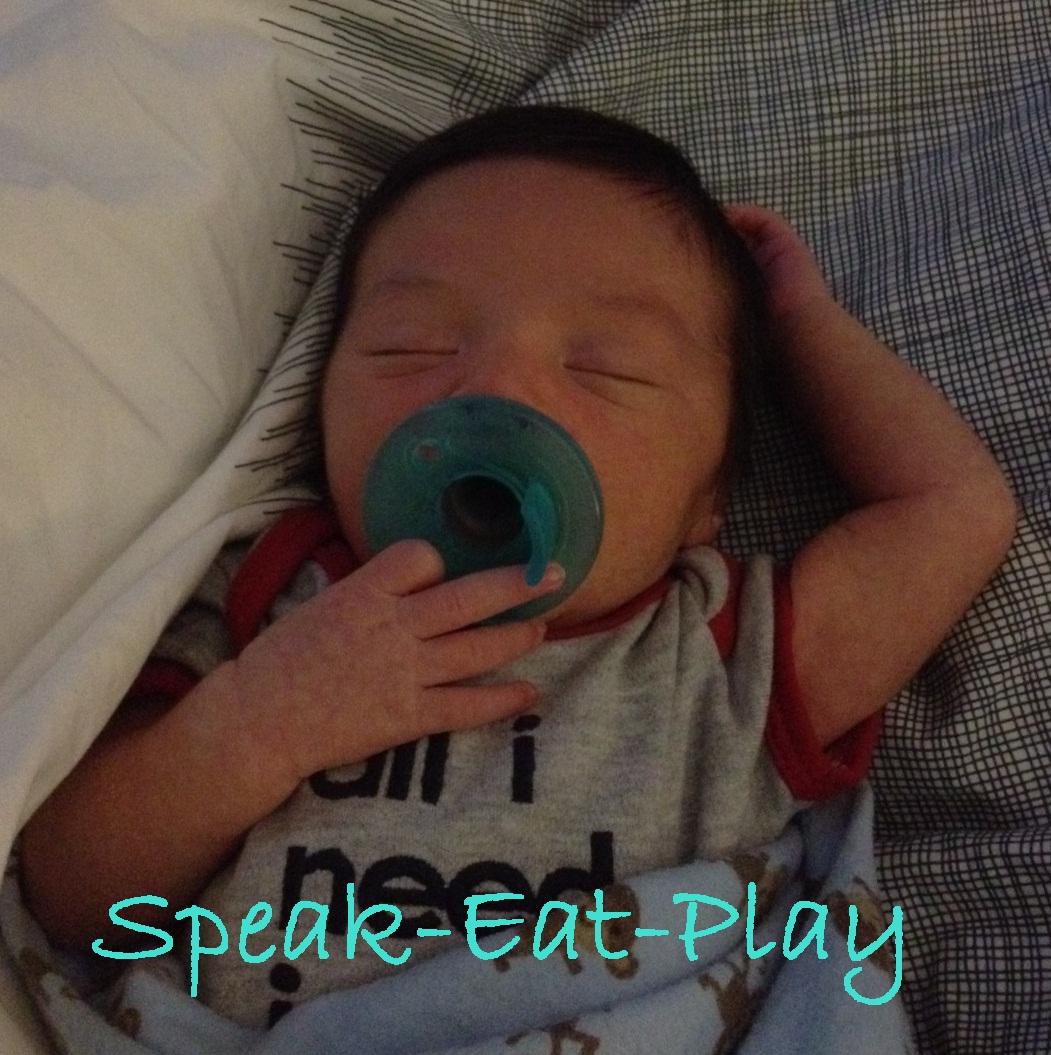
What is my biggest pet peeve? Seeing a toddler with a pacifier! There have even been times that I have seen 4 year olds with a paci in their mouths. Parents if this is your child, please don’t be offended, instead keep reading, I’m here to help. I’m sure every speech-language pathologist feels the same about the dreaded binky, tete, boopy, chupi, mimi, paci, sucky, etc. This innocent looking device is a speech development’s worst nightmare. Well I might be exaggerating a little, but I’m trying to prove a point. Don’t get me wrong, a pacifier serves a purpose in an infant’s life. It helps with soothing, calming and comforting babies, as well as quenching the instinctive desire to suck. This is a behavior that develops in utero, prenatal imaging has shown babies sucking their thumb or fingers before birth, so it’s only natural for your baby to want to suck. Another advantage of a pacifier is that it helps promote the sucking reflex in premature infants. Pacifiers have also been linked reducing the risk of sudden infant death syndrome (SIDS).

However, these benefits apply only to early infancy, as your baby grows the benefits decrease and they begin to wreak havoc in your baby’s mouth including…
However, these benefits apply only to early infancy, as your baby grows the benefits decrease and they begin to wreak havoc in your baby’s mouth including…
Saturday, February 9, 2013
Developmental Milestones
Labels:
child development,
children,
fine motor,
grasping,
infant,
occupational therapy,
pinching,
rolling,
sitting,
toddler,
tracking
Is your child meeting all milestones on time?
by Jackie Gurdian, MS, OTR/L
You and your pediatrician should be checking thesemilestones regularly to assure that your child is meeting their milestones ontime. Early intervention is key to success for your child’s life.
Here are some basic milestones from birth to three years ofage that the American Academy of Pediatrics suggests to look out for. Don’tforget to consult with your doctor.
Birth-3 months
· Able to track toys

· Reacts to sounds
· Smiling

· Raises head and chest when lying on stomach
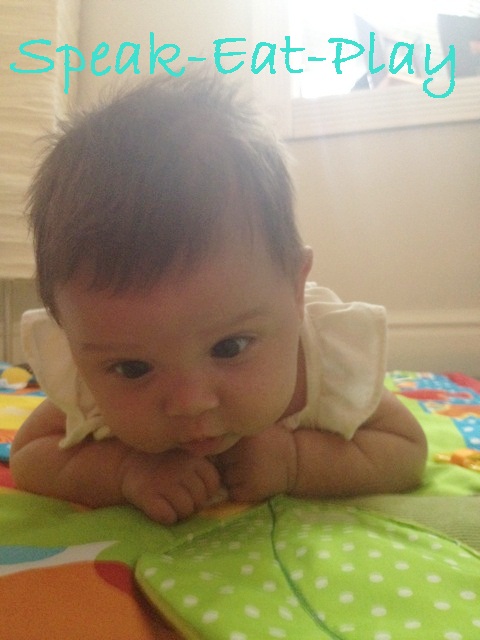
· When placed on firm surface push down on legs
· Grasps and shakes toy
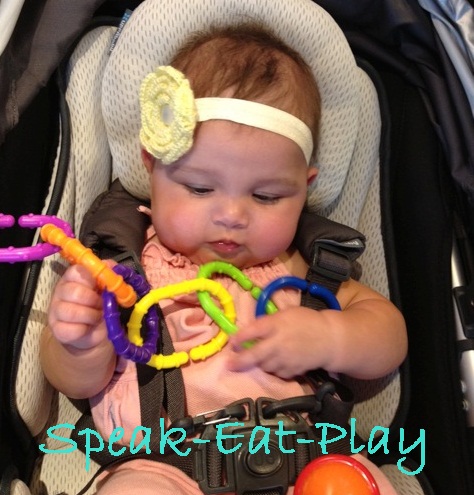
· Swipes at toys
· Brings hands to mouth

· Recognizes familiar people and objects
· Able to track moving objects
4-7 months
· Rolls both directions
· Raking grasp
· Transfer objects from one hand to the other

· Sit independently
· Enjoys social play and play with mirror images
· Able to find partially hidden images
· Attempts to get objects that are out of reach
8-12 months
· Sits independently and get in positionindependently
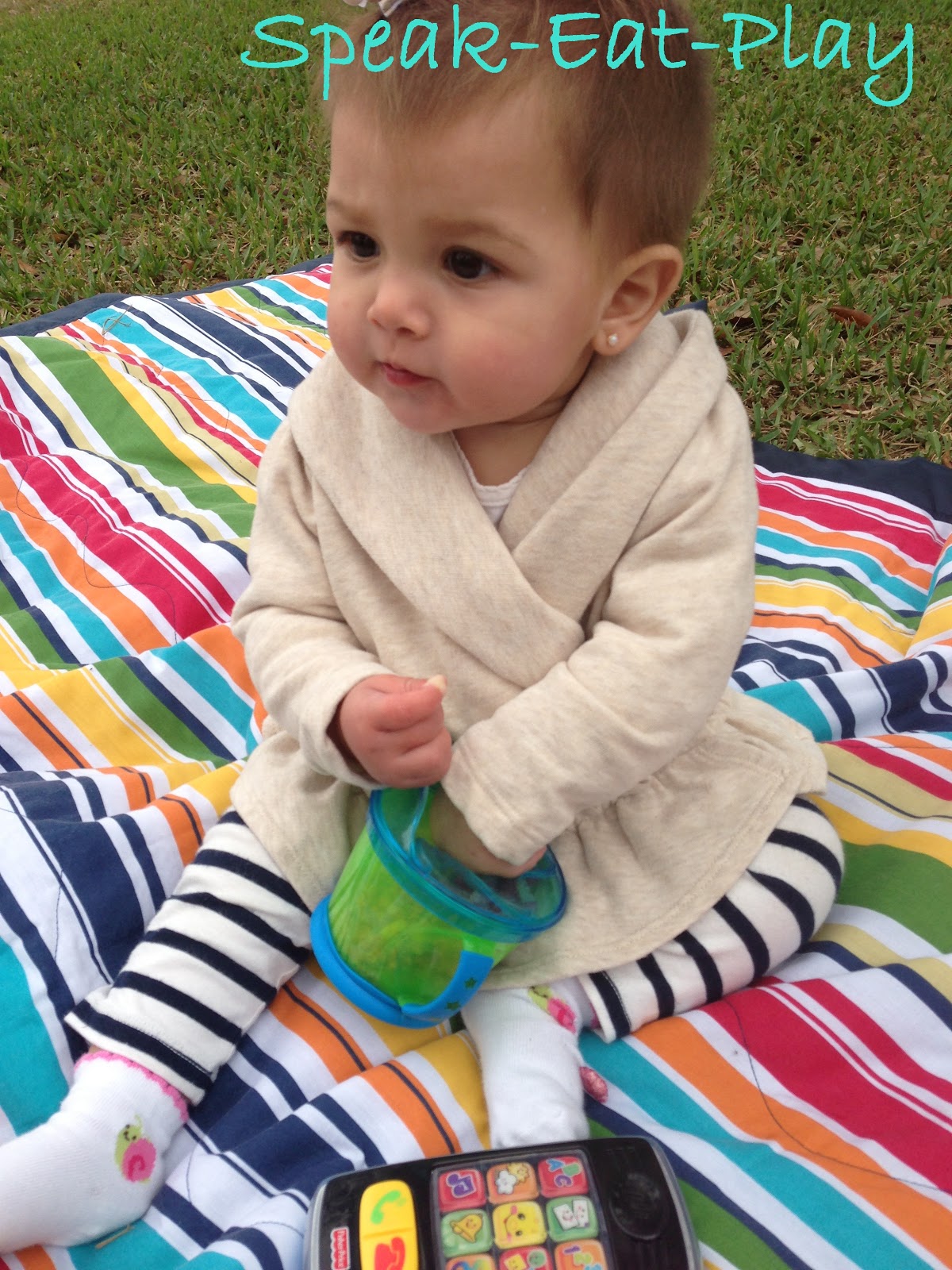
· Crawls
· Pulls up to stand
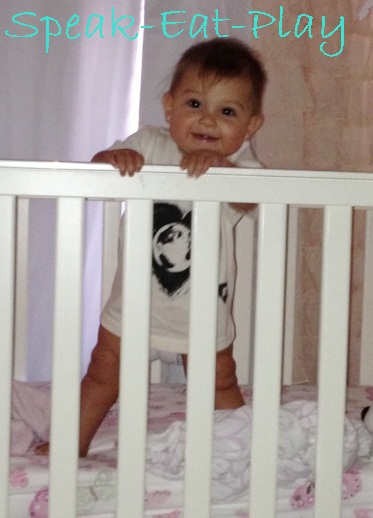
· Cruises furniture
· Separation anxiety begins
· Finger feeds independently
· Imitates people and toys
12-36 months
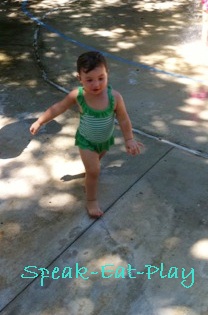
· Walks independently
· Run
· Kick a ball
· Stand on tiptoe
· Pulls toys when walking
· Imitates behaviors
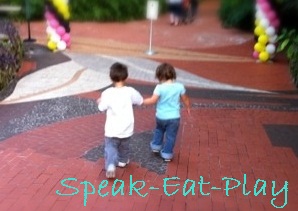
· Enjoys playing with children
· Sorts by shape and color
· Enjoys playing imaginary play
Thanks for reading, and be sure to read my other posts for more information. Feel free to contact me with anyquestions! speakeatplay@gmail.com
Source: American Academy of Pediatrics, www.HealthyChildren.org
Subscribe to:
Posts (Atom)